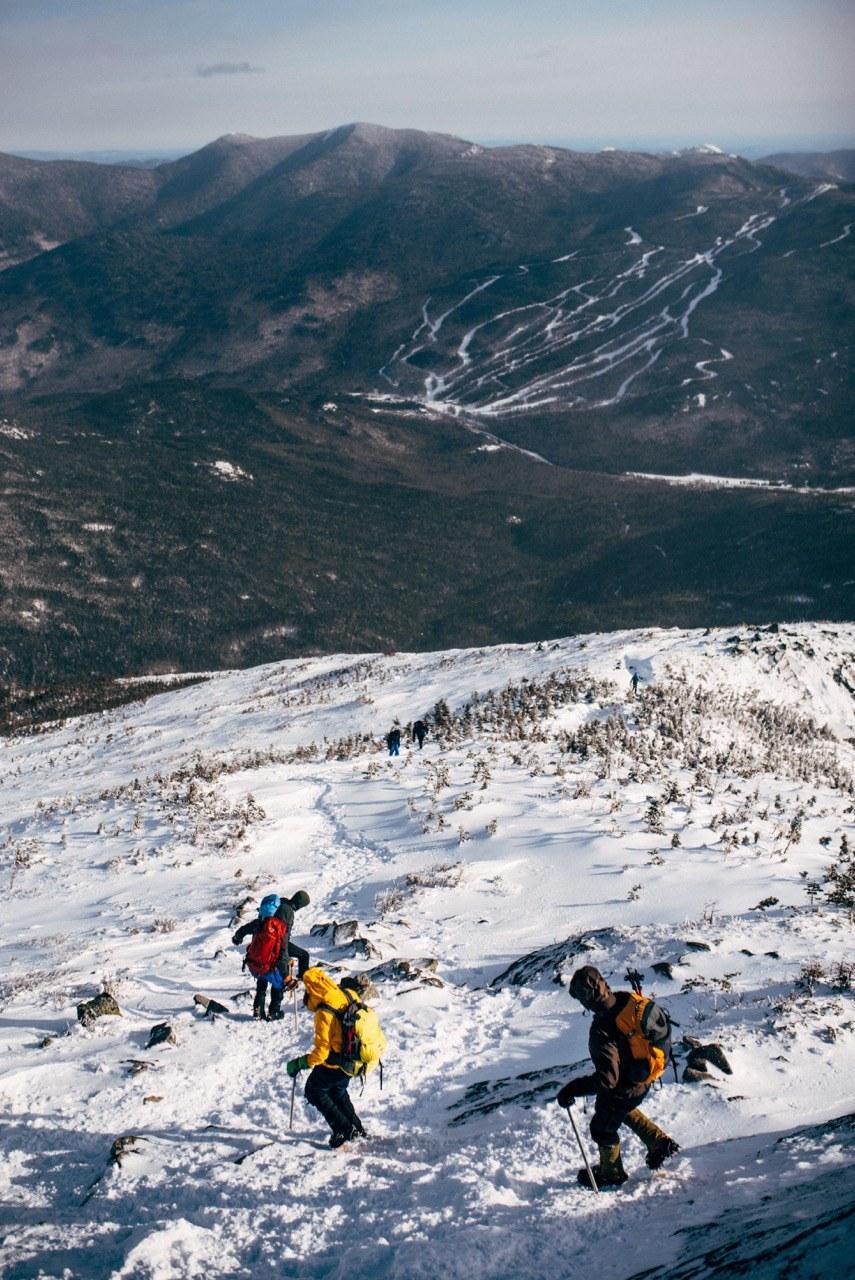

NH White Mountains
Seasons
One of the most dangerous seasonal challenges is weather. As a reminder, you should always check the weather right before you hike as it changes quickly.
Winter
- In the winter season, cold temperatures, wind and avalanches are the primary weather-related challenges. Forest Service snow rangers post avalanche warnings for Tuckerman and Huntington Ravine, which can be found online. Warnings and avalanche advisories are also posted at the Pinkham Notch Visitor Center, Tuckerman Ravine, Hermit Lake Shelters, Harvard Cabin and the Androscoggin Ranger District Office.
- You must be prepared for extremes of cold, wind, snow and rain. Skis or snowshoes are almost always needed. Even if there isn't much snow at the start of your trip, sudden storms can appear and the amount of snow often increases as you climb and gain elevation.
- A minor injury can become life-threatening in the harsh winter environment. Be sure that someone knows your trip plans, and that you are prepared to spend the night if there is an emergency.
- Snow cover may make route finding difficult, so it is critical to know how to navigate with a map and a compass.
Spring
- Spring in the White Mountains can be like winter. Even when there's no snow in the valleys below, once you’re up in the mountains the snow can be very deep. This means that avalanche danger is still a consideration, as well as hypothermia.
- Water crossings are a serious hazard. In spring and after heavy rains, streams can change from trickles to torrents, making crossings difficult or impossible. If you decide to ford a stream, be extremely careful. Waterproof boots and gaiters are a good idea until the snow has melted.
Summer
- In summer, you can encounter extremes in temperatures from freezing cold to high heat and humidity, along with rapid changes in the weather. For this reason, hypothermia remains an acute danger.
- Due to frequent high heat, you should be extremely cautious of heat exhaustion, heat stroke and dehydration.
- Asthma and other respiratory conditions may be triggered by heat. Make sure to be prepared with all appropriate medications.
Fall
- The days are shorter and darkness comes early in the forest and mountains, especially in fall. Plan your hike so you're at the end before dark, and always carry a headlamp or flashlight.
- During fall many trails become blanketed with a mat of leaves. Newly fallen leaves can, in effect, camouflage a hiking trail and make navigation more difficult. Wet leaves on a steep trail are also very slippery, so you should walk with caution.
- Temperatures during the fall months change dramatically during the course of a day. When the sun drops over the horizon, temperatures drop rapidly.
- You may experience winter conditions at any time in the fall, including snow and high winds.
Hunting Season
- While most of us associate hunting season with fall and early winter, May is also hunting season for select species. Dress in bright colors (blaze orange is recommended). Call ahead if you have any concerns.